I’ve been fortunate to have enjoyed going to the library, countless amazon book purchases (and an endless number books waiting to be purchased), and a frequent Libby (Audiobook) user throughout the years. Not all books are the same, and not all books will benefit the reader as it did for me.
I’ve ready hundreds, if not a thousand, books over the years. Here’s a look at my book library for professional development.
Most career advice is delivered in bullets and platitudes. The kind of thinking that actually changes how you see yourself — and what you do next — happens in books. I read constantly. Not for optics. Not to seem current. Because the clients I work with bring me problems that are real, layered, and specific — and the best tools I have for helping them come from authors who spent years doing the research, the interviews, and the honest self-examination that produces something worth reading.
These are the books I recommend most. Not a list of what looks good on a shelf (but they do look great!). The books I actually hand to clients, reference in sessions, and return to when I am stuck on a problem I have seen a hundred times. Some of them will give you a framework. Some will give you language for something you have been experiencing without the words for it. A few will make you slightly uncomfortable — which is usually a sign you picked the right one.
My Favorite Books for ALL Professionals
You’ll want to read these more than once – they share incredible insights into different topics that can elevate your professional development.
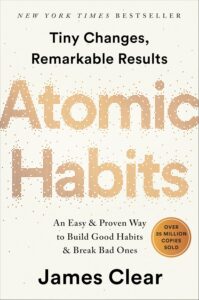
Brief Overview: James Clear demonstrates that lasting change is driven not by motivation or willpower but by the accumulation of small, consistent actions — 1% improvements that compound over time. Introduces the concept of identity-based habits: you do not rise to the level of your goals, you fall to the level of your systems.
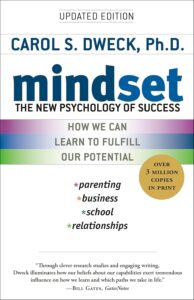
Brief Overview: Carol Dweck’s decades of research reveal two contrasting mindsets — fixed and growth — and how believing that abilities can be developed through effort transforms how students approach challenge, setback, and learning. Students with a fixed mindset avoid difficulty; those with a growth mindset pursue it.
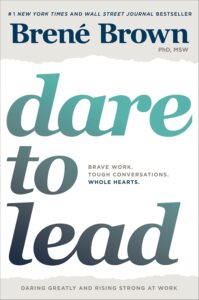
Brief Overview: Researcher Brené Brown presents empirically grounded skills for brave leadership — including rumbling with vulnerability, living one’s values, braving trust, and learning to rise after failure — based on a seven-year study of leadership and organizational culture.
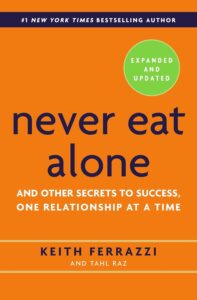
Brief Overview: Keith Ferrazzi presents networking not as a transactional skill but as a philosophy of genuine, generous relationship-building — long-term and rooted in actually caring about other people. Specific tactics for building professional circles authentically at any age.
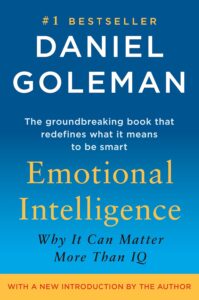
Brief Overview: Daniel Goleman’s foundational work presents emotional intelligence — self-awareness, self-regulation, empathy, motivation, and social skill — as the most reliable predictor of leadership effectiveness, consistently outperforming cognitive intelligence in professional settings.
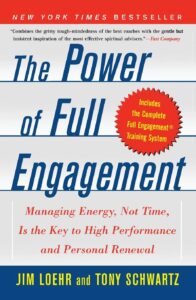
Brief Overview: Performance researchers Jim Loehr and Tony Schwartz argue that the fundamental problem of modern work is not time management but energy management — and that sustained high performance requires strategic recovery across physical, emotional, mental, and spiritual energy dimensions.
Want more book recommendations? Check these out. . .
Most career advice was written for one kind of professional, in one kind of environment, with one set of starting conditions.
My clients do not all look like that — and their reading list should not either. These lists were built around the specific challenges, contexts, and questions that each population actually navigates. Find the one that speaks most directly to where you are.
Executive Leaders
Leadership at scale is not a harder version of what you were doing before. It is a different job — with different demands, different failure modes, and skills that your previous success did not require you to develop.
The executives I work with often arrive having succeeded by being the smartest, hardest-working person in the room. The transition requires something different: building systems that work without you at the center, leading through trust rather than control, and sustaining your own effectiveness across the years rather than the quarters.
The question now is: at what, and is this still what you want?
Mid-career is when the ladder you have been climbing either leads somewhere you actually want to go — or reveals that it was leaning against the wrong wall the whole time. These books are for the professional who is good at what they do but quietly wondering what comes next: whether to accelerate, pivot, or rethink entirely.
They address the leadership behaviors that derail talented people, the transition from doing to leading, and the long game of building a career that compounds rather than plateaus.
Your degree got you to the starting line. It did not teach you how to run the race.
The gap between having credentials and building an actual career is real — and almost nobody addresses it directly. How do you navigate your first 90 days in a new role? How do you build professional relationships when you are starting from scratch? How do you figure out whether you are in the right job, the wrong job, or just the early part of the right one?
These books do the work that most onboarding programs and mentors skip.
The decisions you make about the next few years matter more than most people around you will say plainly. Not to create pressure — to give you the framework to make them intentionally.
These books will not tell you what to do. They will give you the tools to figure it out yourself: how to build habits that survive without external structure, how to develop a growth mindset before college tests it, how to explore direction without waiting to have everything figured out first.
This list is for the student who wants to show up to college — or to the workforce — as someone who has thought about it.