I’ve been fortunate to have enjoyed going to the library, countless amazon book purchases (and an endless number books waiting to be purchased), and a frequent Libby (Audiobook) user throughout the years. Not all books are the same, and not all books will benefit the reader as it did for me.
I’ve ready hundreds, if not a thousand, books over the years. Here’s a look at my book library for professional development.
Career Readiness (High School Grads)
The decisions you make about the next few years matter more than most people around you will say plainly. Not to create pressure — to give you the framework to make them intentionally. These books will not tell you what to do. They will give you the tools to figure it out yourself: how to build habits that survive without external structure, how to develop a growth mindset before college tests it, how to explore direction without waiting to have everything figured out first.
This list is for the student who wants to show up to college — or to the workforce — as someone who has thought about it.
My favorite book recommendations for High School Grads
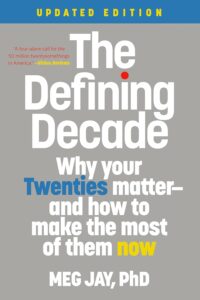
Brief Overview: Psychologist Meg Jay draws on client sessions and neuroscience to show that decisions made in the twenties — about work, relationships, and identity — have compounding effects across an entire adult life. The cultural message to defer these decisions, she argues, is quietly destructive.
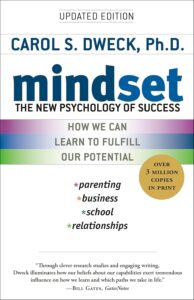
Brief Overview: Carol Dweck’s decades of research reveal two contrasting mindsets — fixed and growth — and how believing that abilities can be developed through effort transforms how students approach challenge, setback, and learning. Students with a fixed mindset avoid difficulty; those with a growth mindset pursue it.
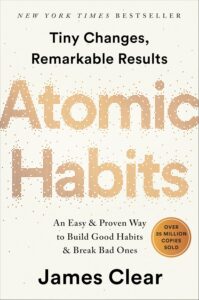
Brief Overview: James Clear demonstrates that lasting change is driven not by motivation or willpower but by the accumulation of small, consistent actions — 1% improvements that compound over time. Introduces the concept of identity-based habits: you do not rise to the level of your goals, you fall to the level of your systems.
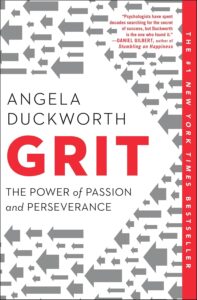
Brief Overview: Psychologist Angela Duckworth’s research on high achievers across fields demonstrates that talent is far less predictive of success than a combination of passion and sustained perseverance she calls ‘grit.’ Includes practical tools for developing it and a compelling challenge to talent-focused educational culture.
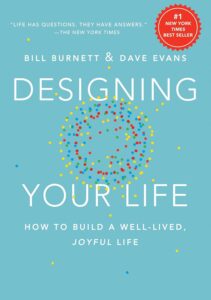
Brief Overview: Stanford design professors apply design thinking to career and life planning — prototyping, reframing, and iterating — providing exercises for exploring possibilities without requiring clarity upfront. Introduces the concept of ‘gravity problems’: assumptions that feel unchangeable but are actually just untested.
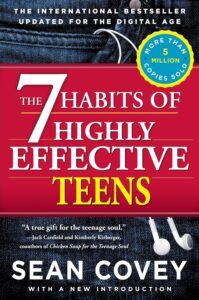
Brief Overview: Sean Covey adapts his father’s classic framework into an accessible guide written specifically for teenagers, covering proactivity, prioritization, empathy, and synergy through relatable stories and self-assessments.
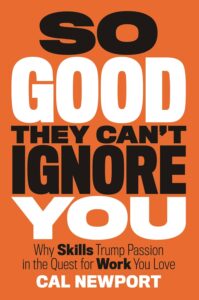
Brief Overview: Cal Newport argues that ‘follow your passion’ is dangerous career advice, proposing instead that rare and valuable skills — not passion — are what give people satisfying, meaningful work. Introduces ‘career capital’ as the currency that buys autonomy and meaning in professional life.
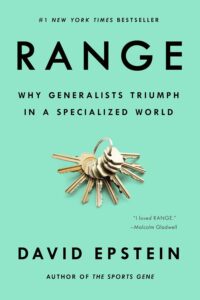
Brief Overview: David Epstein challenges the ‘10,000 hours’ specialization doctrine with evidence that breadth of experience — exploring multiple fields before settling — produces more creative, adaptive, and ultimately successful professionals across most domains.
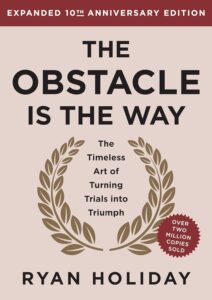
Brief Overview: Ryan Holiday draws on Stoic philosophy and historical examples to argue that obstacles are not barriers to progress but the means by which progress is achieved. A practical guide to reframing adversity as the engine of growth.
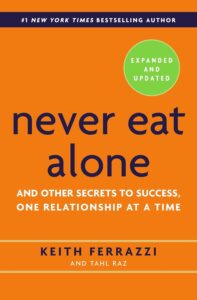
Brief Overview: Keith Ferrazzi presents networking not as a transactional skill but as a philosophy of genuine, generous relationship-building — long-term and rooted in actually caring about other people. Specific tactics for building professional circles authentically at any age.
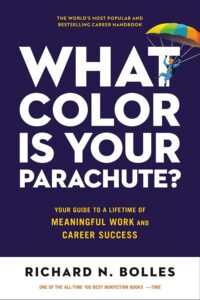
Brief Overview: The teen adaptation of the landmark career guide offers self-assessments, exercises, and frameworks to help high school and college students identify their values, transferable skills, and best-fit career directions before entering the workforce.
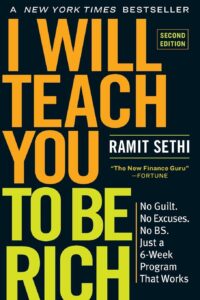
Brief Overview: Written for young adults, Ramit Sethi covers banking, investing, budgeting, and credit cards in plain language without moralizing. Designed to be actionable in the first week of reading with specific, step-by-step instructions.