The “New Year, New Role” optimism has just collided with the brutal reality of the Q1 layoff cycle.
You might have seen the notifications pinging on LinkedIn last week—another round of “Open to Work” banners from colleagues who thought they were safe. Maybe you survived the cut, but the survivor’s guilt is mixing with panic. Or maybe you were impacted, and what you thought would be a quick 6-week transition is looking like a vast, undefined void. Here are a few guides to heal from layoffs; and how to support a friend/family member going through being laid off.
The professional trauma of a layoff or the impending doom thinking about potentially getting laid off can have a serious psychological impact on who we are and how we process through. But before we begin. . .
Let’s pause.
The anxiety you are feeling right now is a physiological response to a systemic contraction, and pausing, reflecting allows our body to find a bit of a calm so we can think more clearly; get creative, and avoid falling into the common traps of a layoff economy.
January and February are historically the highest months for corporate restructuring, and 2026 is amplifying that trend. It closes doors and it also opens up opportunities to learn, adapt, and grow. Sadly, we feel we’re failing if we haven’t secured a role within X time frame. You aren’t failing; you are operating a standard navigation system in a storm that has scrambled the satellites. The feedback loop is broken, and the runway is longer than expected.
In a high-layoff economy, the hiring cycle stretched 2-3x the usual process. In normal economy, the average time frame from a job being posted to a candidate starting to work is upwards of 60 days (source). During a high layoff economy, that can be easily 4 – 6 months because of reduced workforce, living with anxiety of those still employed, higher volume of applicants, more competition, fewer recruiters and HR professionals, etc.

The Trap to Job Search in High-Layoff Economy
“It’s a Numbers Game”
The standard advice during a recession is to “Treat your job search like a full-time job.” Career gurus will tell you to 10x your output: apply to more roles, send more cold DMs, and “hustle harder” to speed up the process.
This is dangerous advice for a mid-career professional.
In a saturated market, increasing your volume into an automated system (ATS) that is already choked with thousands of panic-applications only accelerates your rejection; leading to falling into the trap of “I’ve applied to 1000 jobs!!”, “I just need a chance”, . . .
By shoving more down the congested pipeline won’t get you or anyone else to your destination faster. It may seem like you’re being productive; but it’s actually stalling the market. You cannot “out-hustle” a frozen market algorithmically. Sprinting a marathon will only ensure you burnout before you reach the finish line; and you may stumble several times by not being at your best for networking, interviewing, reducing your value to accept a role, etc.
Right now, you don’t need a floodlight that washes everything out; you need a laser focused on a single point.

Framework to building your success during a slow economy
Let’s apply the sociological concept of “The Strength of Weak Ties” (Granovetter, 1973). In a high-risk economy, hiring managers are risk-averse. A stranger’s resume represents risk. A referral represents safety.
Networking is key
When budgets are tight, companies stop hiring for “roles” and start hiring for “pain relief.” They don’t post these needs publicly because they can’t afford the flood of 5,000 resumes. They hire via backchannels – The hidden job market. This framework stabilizes your mental load by moving you away from the rejection-heavy public market and into the high-conversion hidden market.
Your New Job Search Strategy
We are switching from “Applicant” to “Consultant” to conserve your energy for the long haul.
Step 1: Recalibrate your “burn rate” (time component) – Before you send a single email, you must accept the “Duration Distortion.” In a recession, hiring decisions that used to take 4 weeks now take 8-12 weeks.
- Calculate your financial and emotional runway. If you have 6 months of savings, plan for an 8-month search. – If you need to find a part-time job to keep the lights on; find something that will support you while you continue to focus on your primary goal (WARNING: Don’t get stuck here)
- Stop checking your email every 5 minutes. Allocate specific “Search Blocks” (e.g., 9:00 AM – 11:30 AM) and then step away. – You need to conserve your stress, rejection and success to avoid constantly being anxious and excited. This will lead to emotional and psychological burnout
- List 20 people you worked with 3–5 years ago – First focus on the people you haven’t spoken with in the past couple of years and reach out for a catch up call because they’re in different levels, companies, cities, etc. AND they trust you and your capability.
- Do not ask for a job. – Ask for intel. “I’m looking at the market in [Industry] and seeing X trend. Since you’re at [Company], I’d love your perspective on how you guys are handling it.”
Step 3: The “Pilot Project” Protocol If you are blocked by HR firewalls (ATS, HR emails, etc.), create value before you are hired.
- Identify a gap in a target company’s product or strategy. Create a short (3 page max) “Audit” or “Mini-Strategy” document. – This demonstrates your knowledge, capability, bandwidth, and helps you stand out before a position is even posted.
- Send it directly to the VP/Director (not HR) with the subject line: “Thoughts on [Company]’s Q4 Challenge.” – Best to connect with your peers and one-to-two levels above where you’d be applying. This ensures those who can speak about your work is aware before they have a chance to post the job.
Here are some additional articles discussing how to manage layoff individually, as a friend, with your partner, and as a family.

The Investment Paradox: Buying Speed in a Slow Market
It seems counter-intuitive to spend money when your income stream has dried up. However, in a bear market, Opportunity Cost is your biggest enemy.
Many mid-career professionals try to “DIY” their recovery to save money, only to spend 8+ months spinning their wheels. If a career coach costs $3,000 but helps you land a role 2 months faster, and your monthly salary is $10,000, the ROI is mathematically undeniable.
You aren’t paying for “cheerleading”; you are paying for Velocity:
-
Objectivity over Emotion: You cannot read the label when you are inside the bottle. A career strategist provides the clinical detachment needed to spot the blind spots in your pitch that are getting you rejected.
-
Market Intelligence: While you are guessing what employers want, a good career coach is in the trenches daily, seeing real-time data on what is actually converting.
-
The Accountability Engine: In a long, lonely search, your internal drive will falter. A coach acts as the external regulator for your nervous system, keeping you moving when the “Freeze Response” kicks in.
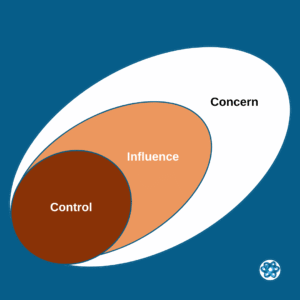
Reclaiming Internal Locus of Control
The most damaging aspect of a slow job market is the erosion of your locus on control. When you rely on job boards, you are giving 100% of the power to an external system that doesn’t care about you. This breeds anxiety and depression.
By accepting the longer timeline, hiring a co-pilot (coach), and using the framework above, you shift the locus back to Internal. You are no longer waiting to be “picked”; you are proactively solving problems. Even if they don’t hire you immediately, the act of creating strategy restores your professional identity. You stop feeling like a victim of the economy and start feeling like a strategist navigating it.
Conclusion & The “Micro-Step”
The economy is cyclical, but your value is cumulative.
A slow market is not a reflection of your ability; it is a test of your stamina. Stop banging your head against the front door (Job Boards); be creative and access the hidden job market by networking, climb through the windows by adding value propositions; and work with trusted support system to get a side entrance to your next role.
Do this in the next 5 minutes
- Block out a “No-Fly Zone” for tomorrow afternoon (e.g., 2:00 PM – 4:00 PM) on your calendar
- Use this time for “Resource Regeneration”—go for a walk, read a fiction book, or exercise. You cannot win a marathon if you never let your muscles recover. Set the block now.
- Schedule a free consultation to see how I can help your journey