I’ve been fortunate to have enjoyed going to the library, countless amazon book purchases (and an endless number books waiting to be purchased), and a frequent Libby (Audiobook) user throughout the years. Not all books are the same, and not all books will benefit the reader as it did for me.
I’ve ready hundreds, if not a thousand, books over the years. Here’s a look at my book library for professional development.
Executive Leaders (Director and higher)
Leadership at scale is not a harder version of what you were doing before. It is a different job — with different demands, different failure modes, and skills that your previous success did not require you to develop. The executives I work with often arrive having succeeded by being the smartest, hardest-working person in the room. The transition requires something different: building systems that work without you at the center, leading through trust rather than control, and sustaining your own effectiveness across the years rather than the quarters.
These books take that seriously.
If you have a favorite book that should be on this list, please email me at Sim@BalancedAtLast.com
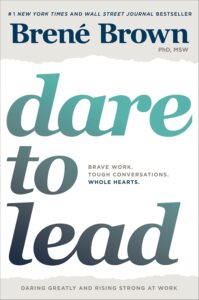
Brief Overview: Researcher Brené Brown presents empirically grounded skills for brave leadership — including rumbling with vulnerability, living one’s values, braving trust, and learning to rise after failure — based on a seven-year study of leadership and organizational culture.
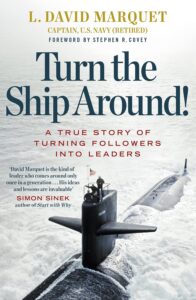
Brief Overview: Former submarine commander David Marquet describes transforming the worst-performing vessel in the US Navy into the best by shifting from a leader-follower model to a leader-leader model — giving control to his crew rather than demanding compliance.
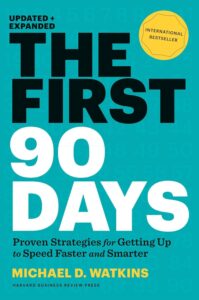
Brief Overview: Michael Watkins provides a structured framework for navigating new roles successfully — covering how to accelerate through the learning curve, secure early wins, build alliances, and manage expectations during the critical first three months. Based on thousands of executive transition interviews.
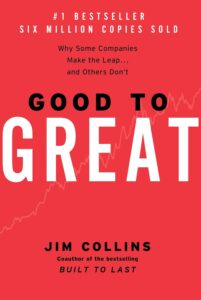
Brief Overview: Jim Collins and his team’s five-year study identifies consistent factors in companies that made the leap from good to great: Level 5 leadership, getting the right people first, confronting brutal facts, a simple hedgehog concept, and a culture of discipline.
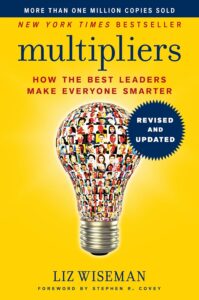
Brief Overview: Liz Wiseman contrasts leaders who amplify the intelligence around them (multipliers) with those who diminish it (diminishers) — often unintentionally — and provides practical tools for shifting from one profile to the other.
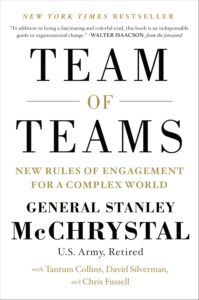
Brief Overview: General Stanley McChrystal’s account of transforming a rigid, hierarchical military organization into a networked, adaptive force during the Iraq War. Argues that rigid hierarchies fail in complex environments and provides a blueprint for restructuring around shared consciousness and empowered execution.
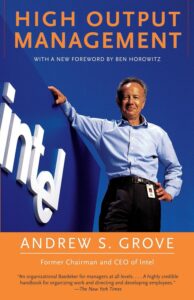
Brief Overview: Intel CEO Andy Grove’s operational guide to management covers leverage, meetings, performance reviews, team motivation, and decision-making at scale with a rigor that treats management as an engineering discipline rather than a soft skill.
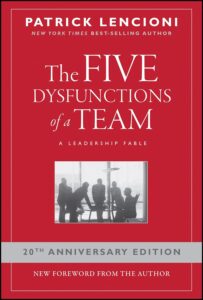
Brief Overview: Patrick Lencioni’s business fable identifies five cascading dysfunctions that undermine team cohesion — absence of trust, fear of conflict, lack of commitment, avoidance of accountability, and inattention to results — with a practical model for addressing each.
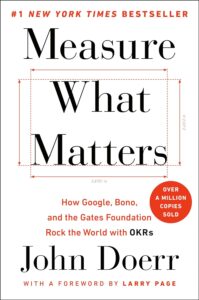
Brief Overview: Venture capitalist John Doerr presents the OKR (Objectives and Key Results) framework developed at Intel and deployed at Google, describing how disciplined goal-setting creates alignment, accountability, and focus across large organizations.
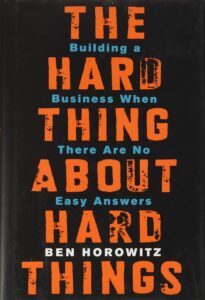
Brief Overview: Venture capitalist and former CEO Ben Horowitz describes the specific, unglamorous challenges of running a company — layoffs, decisions with insufficient information, managing one’s own psychology — with striking honesty about the loneliness and difficulty of executive leadership.
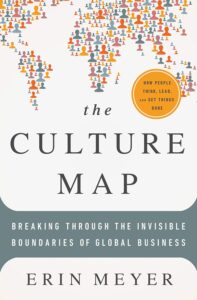
Brief Overview: INSEAD professor Erin Meyer provides a practical framework for navigating cultural differences in business across eight dimensions — communication, evaluation, leadership, decision-making, and more — with specific guidance for reducing cultural distance in professional settings.
Brief Overview: Environmental scientist Donella Meadows introduces systems thinking as a discipline for understanding complex, interdependent problems — showing how feedback loops, delays, and system structure produce behaviors that individual actors cannot easily control or predict.
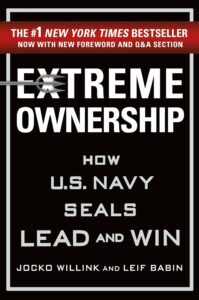
Brief Overview: Navy SEALs Jocko Willink and Leif Babin present 12 leadership principles with the central thesis that leaders must own everything in their world — there are no bad teams, only bad leaders — drawing from high-stakes combat experience and applying it to business.