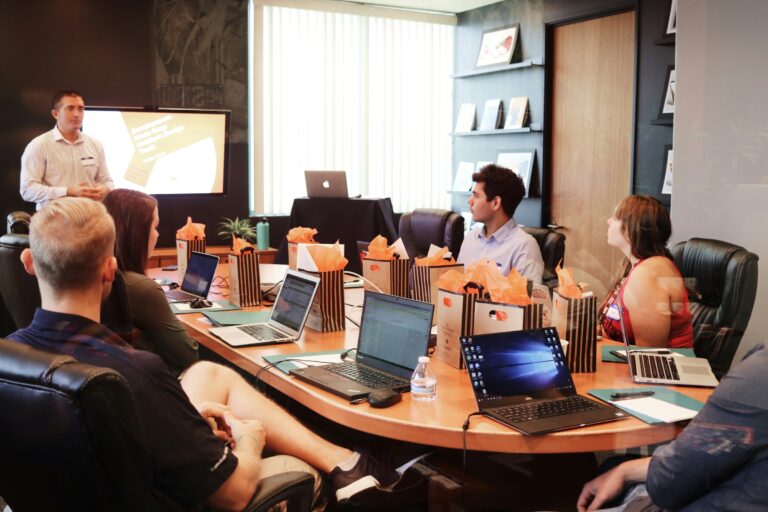
The meeting ended and you knew — immediately, before the door closed behind you — that it hadn’t gone the way you planned.
You had the data. You had the analysis. You had the recommendation fully prepared. But somewhere between your preparation and your delivery, the room shifted. The senior leaders glanced at each other. The energy moved away from you and toward the person who spoke after you — less prepared, honestly, but somehow more credible.
You drove home running the replay. What did they have that you didn’t?
In Orlando’s fastest-growing industries, this question is coming up more often than most professionals want to admit. The city is producing opportunities at a pace its talent pipeline wasn’t designed for — and the gap between technical competency and leadership readiness has never been more visible.
Orlando's Growth Outpacing Its Leadership Pipeline
Orlando is currently projected to lead Florida in employment growth in 2026 at 1.3%, with healthcare, technology, aerospace, and professional services all expanding (Orlando Economic Development). The number of monthly job postings seeking AI skills has more than doubled in two years, reaching nearly 1,200 by late 2025. The finance sector is outperforming national growth rates.
This growth is creating a wave of leadership openings — director roles, VP positions, team lead promotions — that are being filled right now across organizations like Orlando Health, AdventHealth, Lockheed Martin, and the rapidly expanding professional services firms that are making Central Florida their Southeast headquarters.
Here’s the challenge: the professionals with the technical skills to do these jobs aren’t always the professionals with the executive presence to lead them. And organizations that are growing fast don’t have time to develop presence from scratch. They’re looking for it, interviewing for it, and promoting the people who already demonstrate it.
What Executive Presence Actually Means (And What It Doesn't)
Executive presence is one of the most misunderstood concepts in professional development. Let’s clear up what it isn’t before we talk about what it is.
It isn’t confidence that’s performed. The most compelling executives I’ve worked with across Central Florida aren’t necessarily the loudest or the most polished. Some are introverted. Some are soft-spoken. What they share isn’t volume — it’s clarity.
It isn’t reserved for executives. The term is misleading. Executive presence is the ability to communicate your competence and your intention in a way that earns the room’s trust — at any level, in any context.
What it actually is: three things working together at once.
GRAVITY — The sense that you know where you stand. You’re not asking the room to validate your idea before you commit to it. You’re presenting it with the quiet confidence of someone who has done the thinking.
CLARITY — The ability to move from complexity to decision in real time. Orlando’s growing industries are moving fast. Leaders who can synthesize quickly, communicate simply, and act decisively without losing nuance are worth their weight.
ATTUNEMENT — The ability to read the room and adjust. Not chameleon-style people-pleasing, but genuine emotional intelligence. Knowing when to push and when to listen. Knowing which stakeholder in the room needs what kind of communication.

The Orlando Presence Gap and Where It Shows Up
In my work with professionals across Central Florida — along the I-4 corridor — the presence gap shows up in three consistent places:
In Meetings — Professionals with the presence gap tend to wait to be called on, over-qualify their opinions (“I could be wrong but…”), and default to data when the room needs direction. The result is that they become consultants to other people’s decisions rather than architects of their own.
In Promotions — When two candidates are similarly qualified, the one who gets the role is almost always the one who demonstrated readiness before they were asked. They didn’t wait for the promotion to start acting like a director. They were already functioning at that level in how they communicated, how they showed up, and how they represented the organization’s interests.
In Stakeholder Relationships — Healthcare and technology organizations in Orlando operate in complex stakeholder environments. The professionals who advance are the ones who can build credibility across functions — clinical, operational, technical, executive — not just within their own lane.

The Micro-Step - Conduct a Meeting Audit
This week, pay attention in one meeting. Not to the content — to the presence signals. Notice who the room defers to and why. Notice whose ideas get picked up and built on. Notice who uses qualifiers and who doesn’t. Then ask: where do I show up in this picture? Where do I want to show up?
That gap — between where you are and where you want to be in that room — is your executive presence work. It’s specific, it’s learnable, and it moves fast when you have the right support. If you’re in Central Florida and ready to close that gap, let’s have a conversation. Schedule your free consultation here.